In today’s crowded digital ecosystem, visibility is no longer something you achieve by simply publishing content. Millions of pages compete for attention, and search engines act as the primary gatekeepers deciding what gets seen. That means brands must prove their credibility before they are even considered for ranking.
One of the strongest signals of credibility in search engine optimization (SEO) is the presence of referring domains.
These external endorsements are not just a technical SEO metric—they are a core driver of authority, trust, and organic reach.
What referring domains actually are
A referring domain is any external website that links to your site.
For example:
- If Site A links to your article, Site A is a referring domain.
- If Site A links to you 10 times, it still counts as one referring domain, but multiple backlinks.
This distinction matters because search engines evaluate not just how many links you have, but how many independent sources are vouching for you.
A healthy backlink profile typically includes:
- Many unique referring domains
- Links from relevant industries
- Links from authoritative, trusted websites
Referring domains vs backlinks (why the difference matters)
It’s easy to confuse the two, but they measure different things:
Backlinks
These are individual clickable links pointing to your website.
Referring domains
These are the unique websites those links come from.
For example:
- 50 backlinks from 1 website = weak diversity
- 50 backlinks from 50 websites = strong authority signal
Search engines value diversity because it suggests that multiple independent sources trust your content—not just one site repeatedly linking to you.
Why referring domains are so important for SEO
Search engines like Google are designed to prioritize trustworthy, high-quality content. Since they cannot manually verify every page, they rely heavily on external signals—especially links from other domains.
Referring domains influence SEO in several key ways.
1. They act as trust endorsements
Each referring domain functions like a vote of confidence.
When a reputable website links to your content, it signals:
- Your content is useful
- Your site is credible
- Your information is worth referencing
The more high-quality domains that “vote” for you, the stronger your perceived authority becomes.
2. They improve domain authority signals
While Google doesn’t officially use “domain authority” as a metric, SEO tools and algorithms evaluate similar signals:
- Link quality
- Link diversity
- Source relevance
Referring domains from trusted, established websites carry significantly more weight than links from low-quality or unrelated sites.
3. They drive referral traffic (not just rankings)
Referring domains are not only an SEO factor—they are also a traffic source.
If your link appears in:
- A blog post
- A news article
- A niche directory
- A resource page
Users can click through directly, bringing:
- Highly relevant visitors
- Higher engagement rates
- Potential conversions
This makes referring domains both a ranking factor and a distribution channel.

4. They increase topical relevance
Search engines evaluate context.
If your website is consistently linked by domains in your niche, it strengthens your association with that topic.
For example:
- A fintech blog linked by finance sites → stronger financial authority
- A fitness brand linked by health and sports sites → stronger fitness relevance
This helps your content rank for industry-specific searches.
5. They help break the “visibility paradox”
One of the hardest challenges in SEO is the early-stage problem:
You need traffic to rank, but you need ranking to get traffic.
Referring domains help solve this by bypassing algorithm dependence. Instead of waiting for search engines to discover your content organically, external sites actively send visitors and signals of value.
Quality matters more than quantity
Not all referring domains are equal.
A small number of strong domains can outperform hundreds of weak ones.
High-value referring domains typically have:
- Strong reputation and trust
- High topical relevance
- Real human traffic
- Editorial control (not spam directories)
Low-value referring domains include:
- Spam networks
- Irrelevant niche sites
- Automated link farms
- Low-quality directories
Search engines are increasingly good at distinguishing between genuine endorsements and artificial link building.
How referring domains influence rankings indirectly
Referring domains don’t just send signals—they shape user behavior, which then influences rankings.
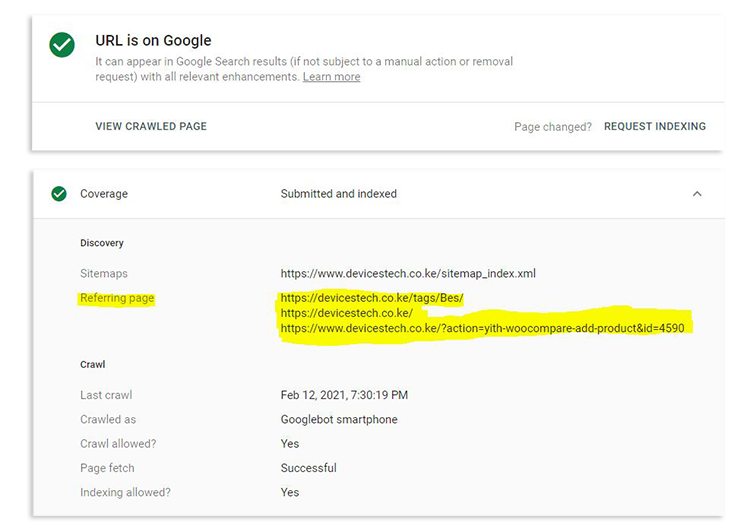
They can improve:
- Click-through rate (CTR)
- Time spent on page
- Return visits
- Brand searches
These behavioral signals reinforce to search engines that your content is useful, which strengthens your ranking position over time.
How to earn more referring domains

Building referring domains is not about shortcuts—it’s about earning attention.
1. Create content worth referencing
The most reliable strategy is still:
- Original insights
- Data-driven content
- Practical guides
- Industry analysis
People link to content that solves problems or provides unique value.
2. Build relationships in your niche
Link building is often relationship-driven.
Common approaches include:
- Guest posting
- Expert contributions
- Podcast interviews
- Collaborative content
These create natural opportunities for high-quality backlinks.
3. Focus on shareable formats
Some content types naturally attract links:
- Research reports
- Case studies
- Statistics pages
- Tools and calculators
- In-depth guides
These are frequently cited by other websites.
4. Earn mentions through visibility
Referring domains often come indirectly from:
- Social media exposure
- PR coverage
- Community discussions
- Industry roundups
Visibility in one channel often leads to backlinks in another.
Common mistakes that weaken referring domain value
Many websites fail not because they lack links, but because they attract the wrong ones.
Key mistakes include:
- Over-reliance on one referring domain
- Buying low-quality backlinks
- Ignoring relevance between sites
- Publishing thin or generic content
- Focusing on quantity instead of authority
These can reduce trust rather than increase it.
The strategic role of referring domains in modern SEO
SEO has shifted significantly over time.
It is no longer:
- keyword stuffing
- mass link building
- technical manipulation
It is now:
- credibility-based
- authority-driven
- ecosystem-oriented
Referring domains sit at the center of this system because they represent external validation.
In simple terms:
If multiple trusted websites point to you, search engines assume you are worth showing.
Final takeaway
Referring domains are one of the strongest signals of authority in SEO because they combine three critical factors:
- Trust (who is linking to you)
- Diversity (how many independent sources support you)
- Relevance (why they are linking to you)
They don’t just improve rankings—they build a foundation of credibility that affects traffic, branding, and long-term visibility.
In a competitive online environment, content alone is not enough. What determines success is whether other trusted domains are willing to stand behind it.