For much of modern fashion history, breaking into the industry meant passing through a narrow set of gatekeepers. Department store buyers decided what reached consumers. Fashion editors determined which designers were worth attention. Runway shows and wholesale contracts acted as entry tickets into legitimacy.
For independent designers, that system often meant compromise: diluted creative vision, long approval cycles, and reliance on intermediaries who controlled access to customers.
That structure is no longer the default.
Today, fashion is shifting toward a model where designers can bypass traditional retail entirely and build brands directly with audiences online. The result is a growing ecosystem of independent labels that launch faster, scale more flexibly, and retain full control over identity, pricing, and customer relationships.
This is not just a distribution change. It is a structural reset of how fashion businesses are built.
The Collapse of Traditional Retail as a Gatekeeper
The traditional fashion retail pipeline has been weakening for more than a decade, but recent years accelerated the decline.
Department stores have closed locations across major markets. Wholesale margins have tightened as retailers demand more control over pricing and inventory risk. Meanwhile, the cost of maintaining physical retail space continues to rise while consumer behavior moves increasingly online.
A major turning point came during the retail disruptions of the early 2020s, when numerous large chains in the U.S. and Europe filed for bankruptcy or dramatically reduced their footprint. This didn’t just affect retailers—it reshaped the entire supply chain for fashion brands dependent on wholesale distribution.
As those channels contracted, digital-native brands filled the gap.
Direct-to-consumer (DTC) companies demonstrated that fashion brands could grow without physical retail partnerships. Brands such as Reformation, Pangaia, and Telfar scaled primarily through digital storytelling, community engagement, and online sales infrastructure rather than wholesale expansion.
The implication for new designers is clear: visibility no longer depends on being selected by industry institutions. It depends on building direct audience access.
The New Fashion Stack: Building a Brand Online
In the digital-first fashion economy, a brand is not defined by its presence in stores. It is defined by its presence online.
Every touchpoint becomes part of the brand ecosystem:
- The website functions as the flagship store
- Social media acts as discovery and cultural positioning
- Content platforms serve as storytelling engines
- E-commerce infrastructure handles conversion and retention
However, successful independent brands go beyond simply “being online.” They build intentional systems.
1. A clear and consistent brand narrative
Modern fashion brands are not just selling clothing—they are selling identity, perspective, and meaning.
Successful independent designers define:
- What they stand for (sustainability, heritage, innovation, exclusivity, etc.)
- Why their brand exists beyond product sales
- How that story is reflected in design, packaging, and communication
Without narrative clarity, even visually strong brands struggle to retain attention.
2. Visual identity as a commercial asset
A cohesive aesthetic is no longer optional. It is part of the product.
Every element matters:
- Typography and logo design
- Product photography style
- Color systems and layout consistency
- Social media presentation
Independent designers often underestimate how much consistency drives perceived brand value. In a saturated digital environment, visual clarity directly impacts trust.
3. The website as the brand’s core asset
While social platforms generate attention, the website converts attention into business.
A dedicated domain gives a brand permanence and credibility that social profiles cannot replicate. It signals ownership, stability, and professionalism.
In fact, domain identity has become a subtle but important part of positioning. Industry-specific extensions like .CFD (Clothing, Fashion, Design) are increasingly used by emerging designers to communicate niche relevance immediately.
A strong domain can:
- Improve memorability
- Increase search visibility
- Strengthen brand legitimacy
- Provide full control over customer experience
In a competitive market, even small signals of professionalism can influence purchasing decisions and partnership opportunities.
4. Content as a trust-building mechanism
Modern fashion consumers rarely engage with brands only through products.
They engage through:
- Behind-the-scenes content
- Design processes and sketches
- Founder storytelling
- Cultural context behind collections
This type of content builds emotional investment. It transforms customers from passive buyers into engaged followers of a creative journey.
5. Search visibility and long-term discoverability
While social media drives short-term attention, search engines provide long-term discovery.
Independent designers who ignore SEO often rely entirely on algorithms they do not control. Those who invest in search optimization can attract:
- Buyers actively looking for specific styles
- Stylists sourcing pieces for shoots
- Editors researching emerging designers
Searchable content such as “sustainable eveningwear,” “handmade streetwear in Europe,” or “small-batch fashion studio” can create consistent inbound demand over time.
Sustainability as Structural Advantage, Not Marketing
Sustainability in fashion is often framed as branding. In reality, for independent designers, it is increasingly a structural advantage.
Unlike legacy fashion houses, independent labels are not constrained by large supply chains or legacy production systems. This allows them to build sustainability into operations from the beginning.
Common approaches include:
- Small-batch production to reduce waste
- Made-to-order manufacturing models
- Use of deadstock or recycled fabrics
- Transparent sourcing practices
Consumer demand reinforces this shift. A large majority of younger buyers—particularly Gen Z—consider sustainability when making purchasing decisions.
For independent designers, this creates alignment between:
- Ethical production
- Brand differentiation
- Customer loyalty
Sustainability is no longer a niche positioning strategy. It is a competitive framework.
The Modern Sales Funnel: From Social Platforms to Owned Infrastructure
Independent fashion brands now operate across a distributed ecosystem of platforms.
Key tools include:
- Shopify – full control over e-commerce and branding
- Etsy – access to built-in marketplace demand for small-scale creators
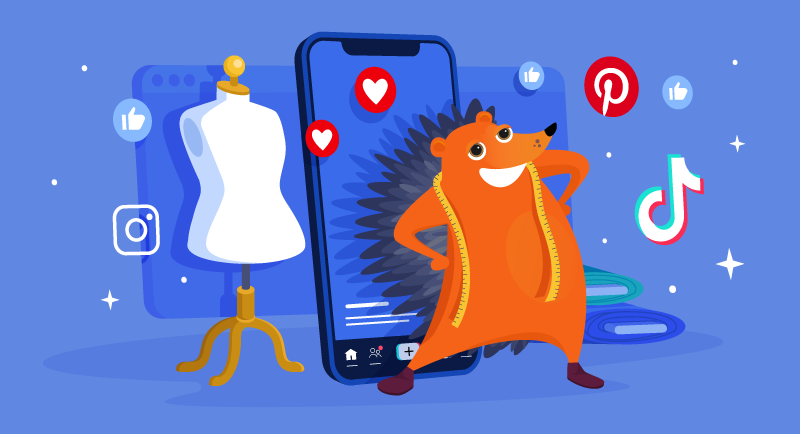
- Instagram and TikTok Shop – discovery and impulse-driven sales
- Pinterest – long-term visual discovery and inspiration traffic
However, platform diversification only works when structured strategically.
Successful brands:
- Focus on one or two primary acquisition channels
- Use social platforms for discovery, not dependency
- Optimize content for conversion rather than vanity metrics
- Drive traffic back to their own domain as the central hub
The key principle is ownership. Platforms can change algorithms. A domain remains stable.
Case Studies: Independent Brands Built Without Traditional Gatekeepers
Several modern fashion labels demonstrate how digital-first strategies outperform traditional pathways.
Hanifa
Known for pioneering 3D virtual runway presentations, Hanifa used digital technology to bypass traditional fashion week systems entirely. The result was global visibility without reliance on legacy media institutions.
Berriez
What began as an Instagram-based vintage resale account evolved into a recognizable fashion brand. Its success came from community building, strong visual identity, and inclusive positioning.
LUAR
Founded by Raul Lopez, LUAR built its identity around cultural narrative and direct audience engagement. Instead of relying on traditional runway validation, it developed a distinct voice that resonated online and within fashion communities.
Each of these brands demonstrates a shift in power: from institutions to creators.
Why Domain Identity Still Matters in a Social-First World
There is a common misconception that websites are less important in an era dominated by social media. The reality is the opposite.
A domain is not just a technical asset. It is a positioning tool.
A strong domain:
- Anchors brand credibility
- Improves discoverability across search engines
- Creates a centralized identity
- Increases memorability in competitive markets
For fashion brands, especially emerging ones, domain choice can influence perception before a customer even sees a product.
Industry-aligned domains such as .CFD reinforce clarity instantly, signaling that the brand operates within fashion, clothing, and design.
In a crowded digital environment, clarity is an advantage.

From Designer to Founder: The Shift in Mindset
The biggest change in modern fashion is not technological. It is psychological.
Designers are no longer only creators. They are operators of independent businesses.
That shift requires:
- Ownership of audience relationships
- Control over brand narrative
- Understanding of distribution channels
- Strategic thinking about visibility and positioning
Creative skill alone is no longer sufficient. Execution, structure, and clarity now determine success.
Final Perspective
The fashion industry is no longer defined by physical gatekeepers or seasonal approval cycles. It is defined by direct access, digital identity, and the ability to build independent ecosystems.
Designers today do not need to wait for validation from traditional institutions. They can build audiences, sell products, and establish global brands directly through digital infrastructure.
In this environment, success belongs to those who combine creativity with ownership.
The runway is no longer a physical event. It is a distributed digital system—starting with a domain, expanding through content, and scaling through direct customer relationships.
And in that system, control is everything.